
Why pavers sink, and how a proper base prevents it
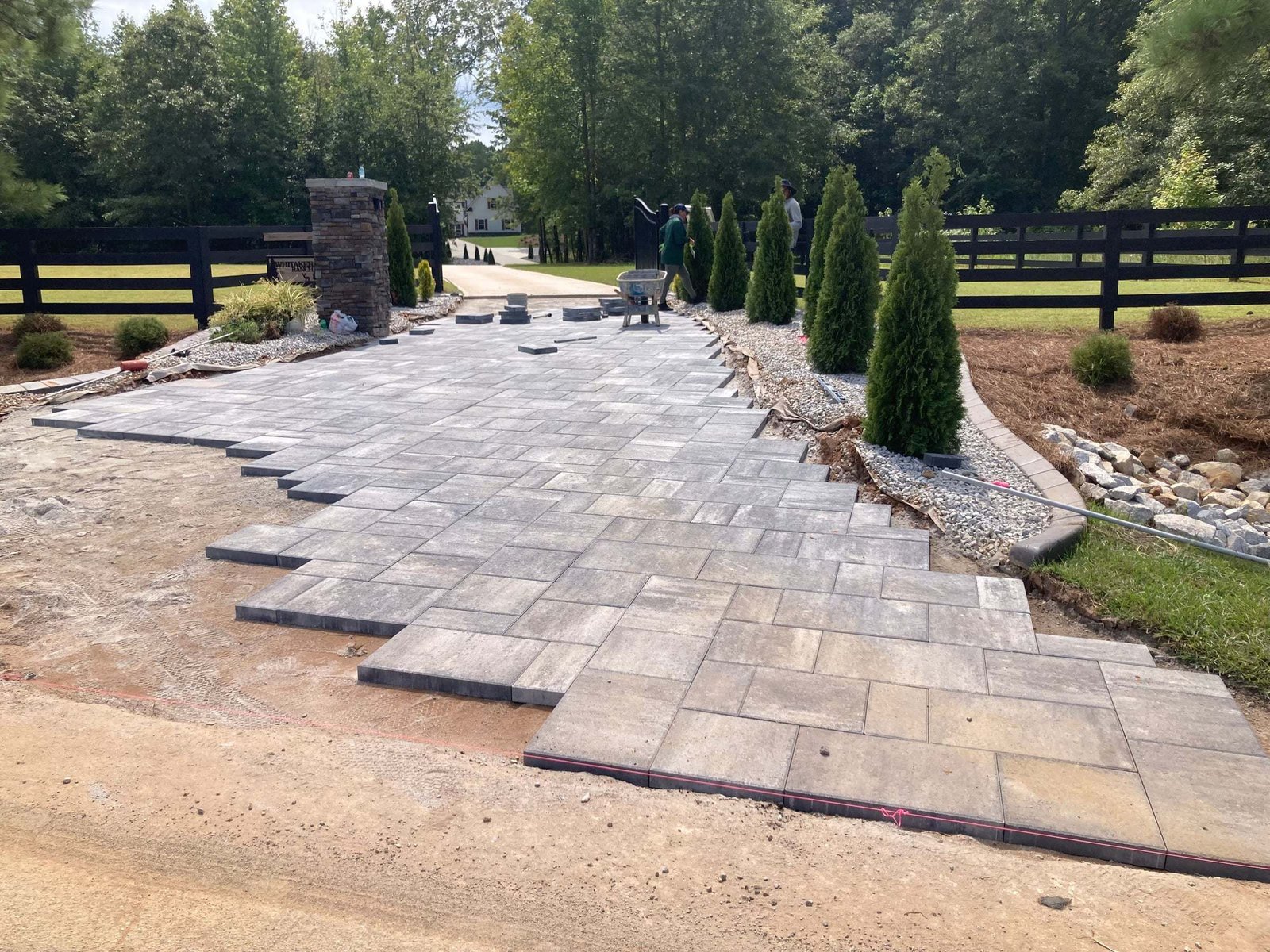
Pavers themselves rarely fail. When a driveway dips where the car parks, a patio holds puddles after a storm, or pavers rock when you step on them, the problem is almost always underneath: the base. Here’s what goes wrong and what a base built to last looks like.
The usual reasons pavers sink
- A base that’s too thin. Pavers set on a shallow layer of rock, or straight on sand, have nothing to spread the load. Tires and foot traffic push them down over time.
- Base rock that wasn’t compacted. Loose rock settles on its own. If it isn’t compacted in layers during the install, it compacts later, under your patio.
- No edge restraint. Without a restraint locking the outside edge, pavers slowly creep outward, the joints open up and the surface loses its shape.
- Poor grading. If the surface isn’t sloped to move water away, water sits on top, finds the joints and washes out the bedding sand underneath.
- Organic soil left in place. Roots and topsoil break down over time. If they aren’t dug out first, the ground under the base keeps settling.
What a proper base looks like
At Reliable Hardscapes, every paver job is built the same way:
- Dig out to clean, firm ground, taking out roots and organic soil.
- Build 4–6 inches of crushed base rock. Driveways get the deeper end, because they carry cars.
- Compact it in layers. Each layer is compacted with a plate compactor before the next goes down, so the base is as firm as it will ever be before a single paver is laid.
- Set the pavers on a level bedding layer with the surface sloped to move water off.
- Lock the edges with an edge restraint so nothing can creep or spread.
- Fill the joints with polymeric sand, which hardens to lock the pavers together and keeps weeds and ants out.
Florida makes it matter more
Tampa Bay’s sandy soil drains well, but it shifts easily when it’s wet, and summer storms dump a lot of water in a short time. A thin, loosely packed base under pavers gets tested every July. A deep, compacted base with good grading is what keeps a driveway flat for years.
Can sunken pavers be fixed?
Usually, yes. Small low spots can be lifted, the base re-leveled and compacted, and the same pavers relaid. Widespread sinking, or a base that was never built right, often means pulling up the area and rebuilding the base. Either way, the fix starts with what’s underneath.
Planning a paver project?
Whether it’s a new paver driveway, a patio or pool deck, or fixing pavers that have settled, we’ll come out, look at the site and give you a written price. Prices start in the Tampa paver cost guide.