
Paver patio ideas for Florida backyards
The best paver patio ideas for a Florida backyard start with the climate: shade from the afternoon sun, a surface that doesn’t get too hot, a layout that sheds summer storm water, and a plan that ties into the lanai, the pool or an outdoor kitchen. Below are backyard paver ideas that work well here, with photos from our own jobs.
Many of the photos show natural stone. Every layout here works just as well with concrete pavers or travertine; the material changes the look and the price, not the idea.
1. Extend the lanai
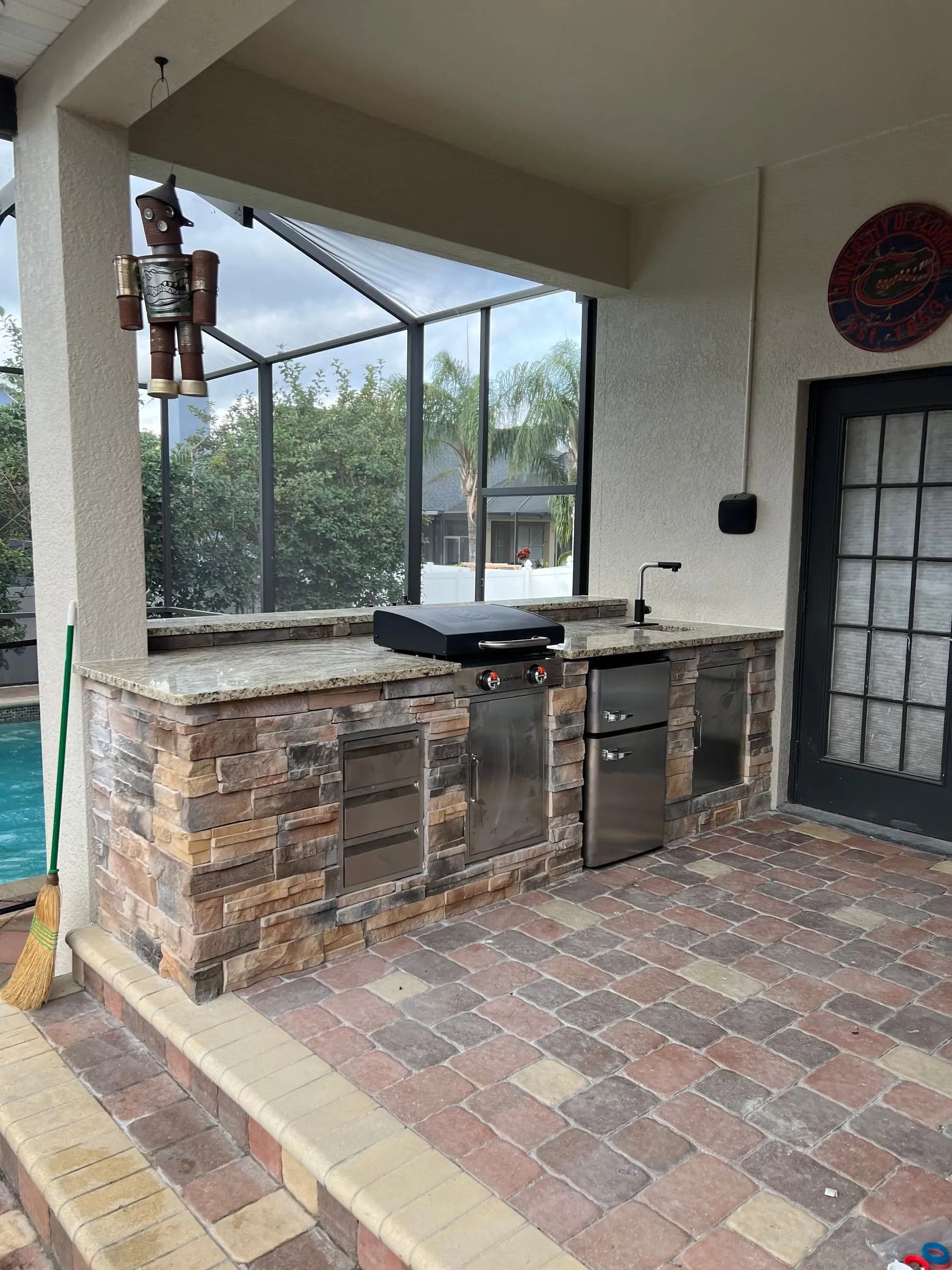
Most Tampa Bay homes have a small concrete slab under the lanai roof. Extending it with pavers is one of the simplest ways to get a usable patio. The new area goes past the roof line into the yard, and the old slab can be covered so the whole thing matches.
Plan for:
- Height at the door. Covering the slab adds height, so measure the sliding door threshold first. Our guide to pavers over concrete covers how that works.
- Shade. The part past the roof gets full sun. A lighter paver, an umbrella spot or a pergola makes it usable on summer afternoons.
- Water. The new patio should slope away from the house, not toward the lanai.
2. Build the patio around a feature
A patio doesn’t have to be a rectangle off the back door. Some of the best ones are built around something: a fountain, a fire pit, a big oak, or a view of the water.
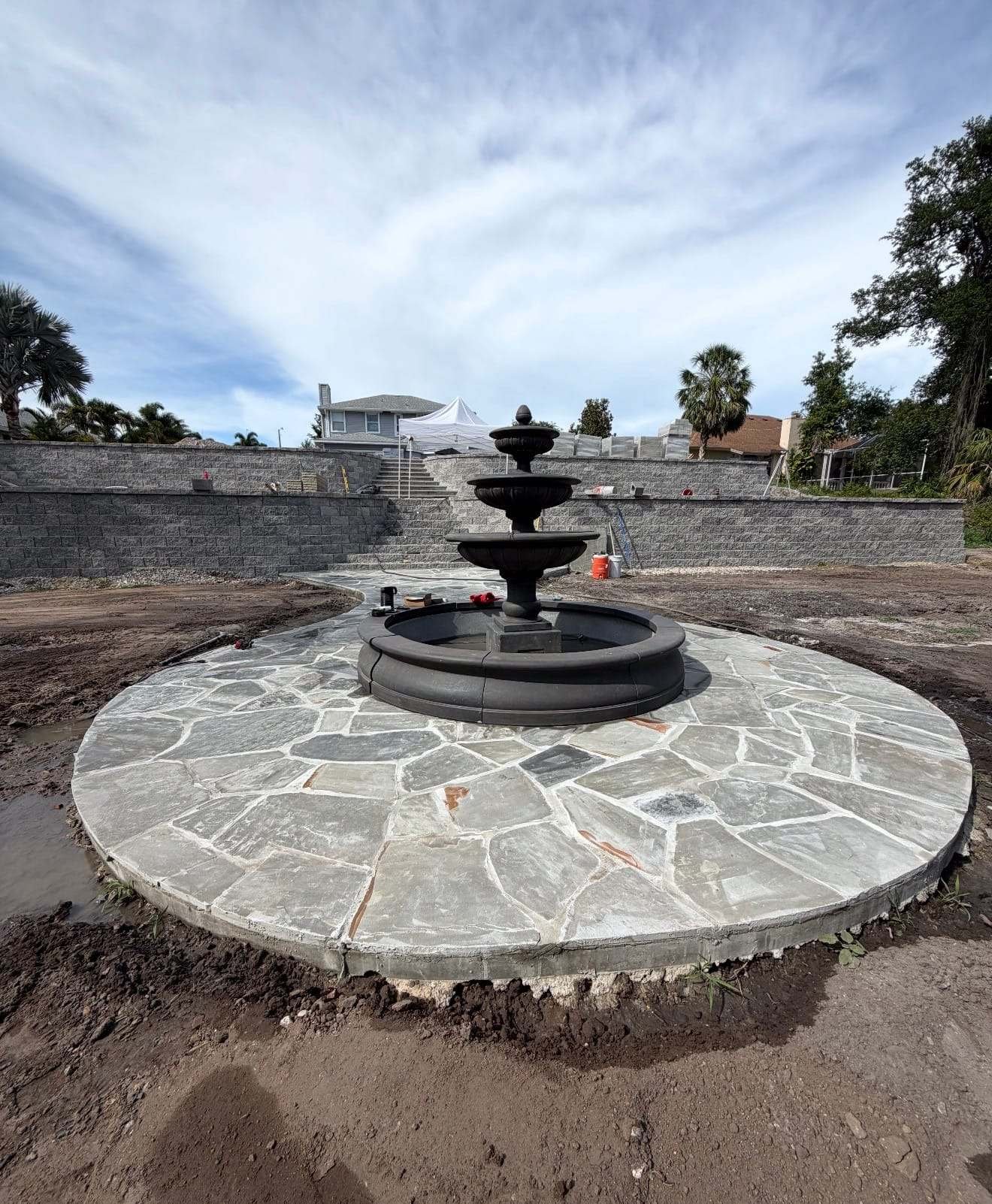
The photo at the top is one of ours: a round flagstone patio around a tiered fountain, with a block retaining wall and steps behind it. Round and curved patios take more cutting than square ones, but they suit a garden or a feature better.
3. Add a fire pit
A fire pit turns a patio into somewhere you use in the evenings, and Florida evenings from November to March are made for it. A built-in fire pit can be part of the patio itself, or set into the pool deck.
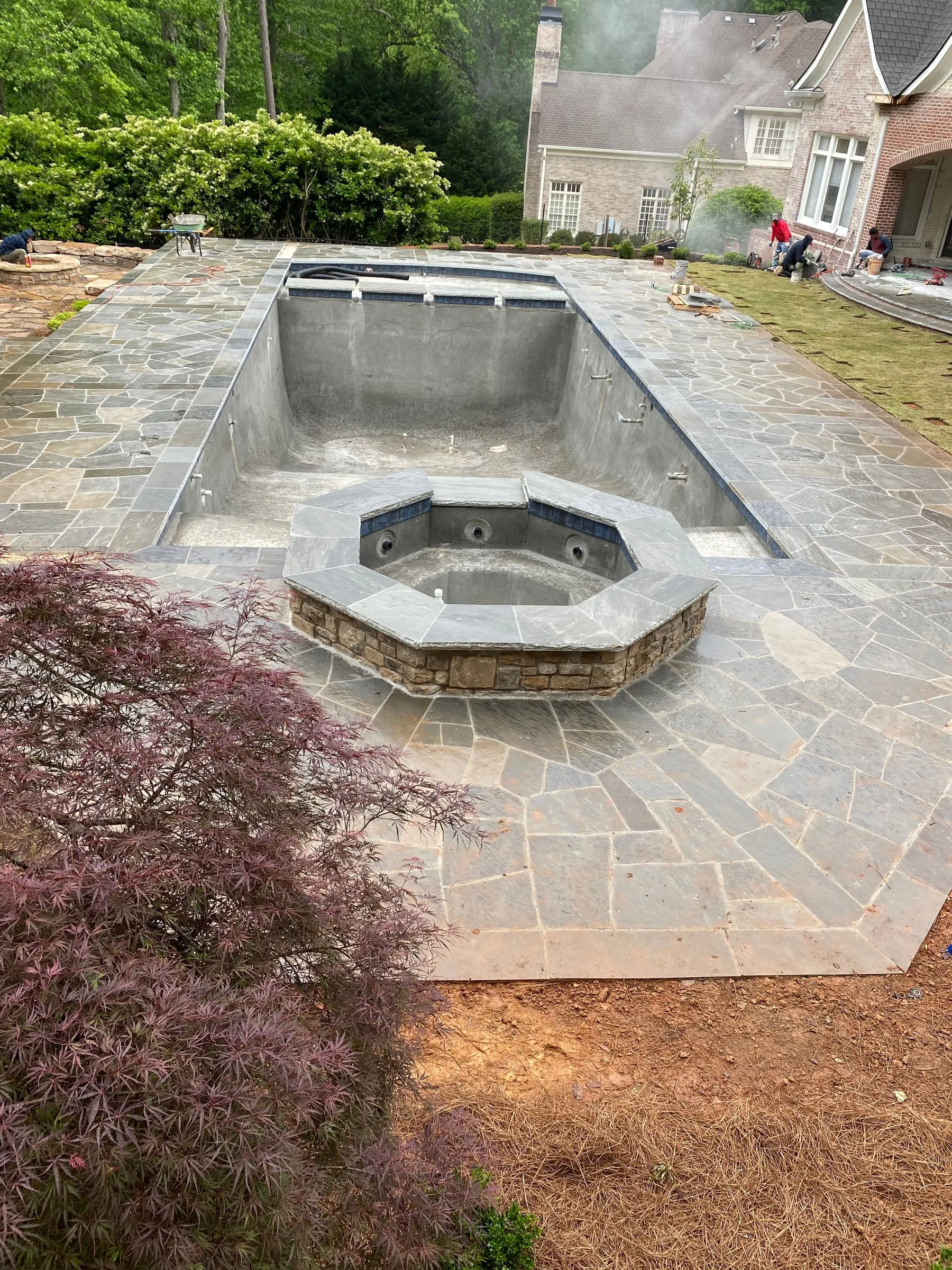
Leave room for chairs all the way around, plus a walkway past them. See our outdoor fireplaces and fire pits page for what we build.
4. Put an outdoor kitchen on it
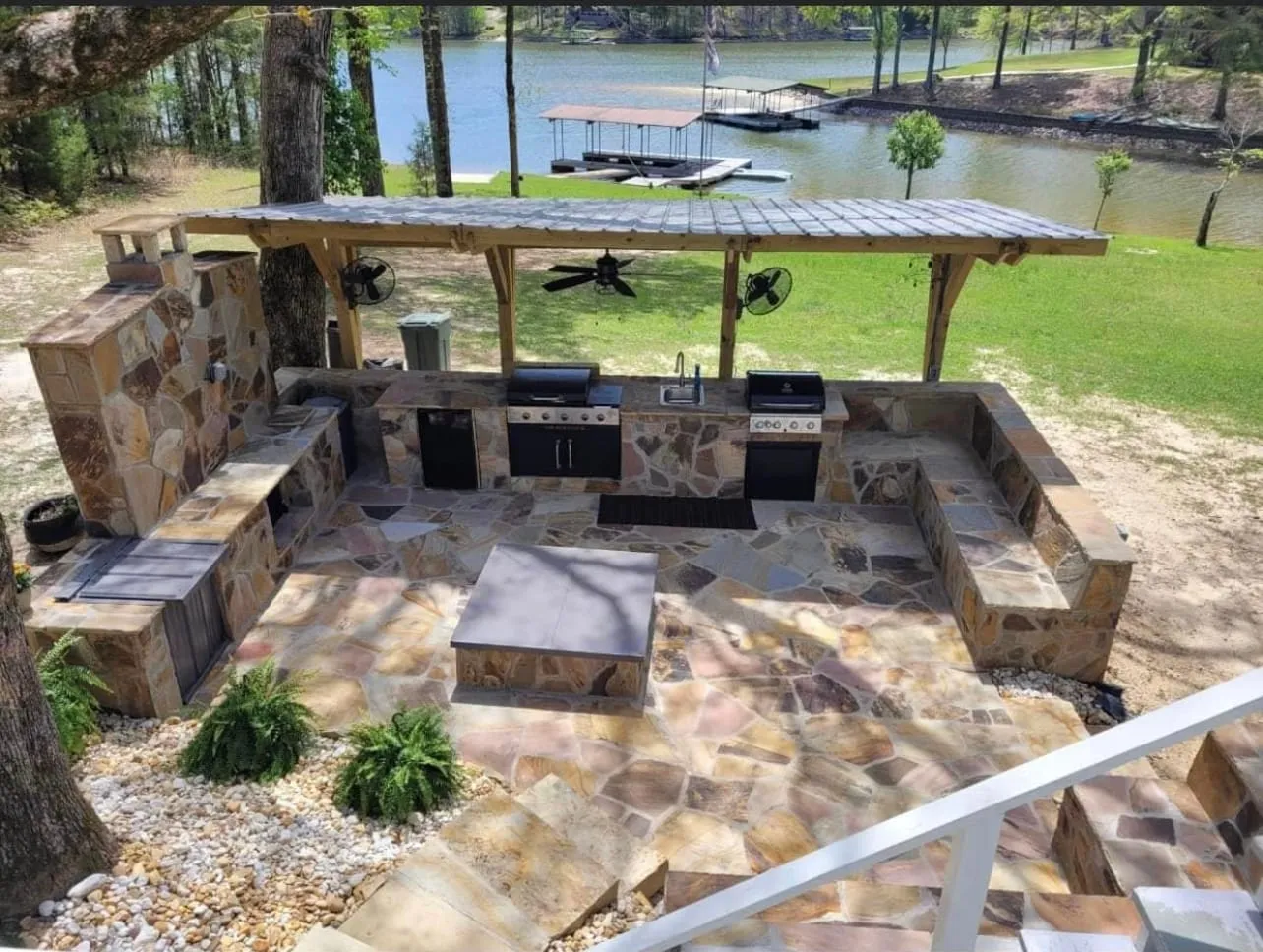
If you grill a lot, a patio is the start of an outdoor kitchen. In Florida, kitchens hold up best under a roof or pavilion that keeps the sun and rain off the grill and counters.
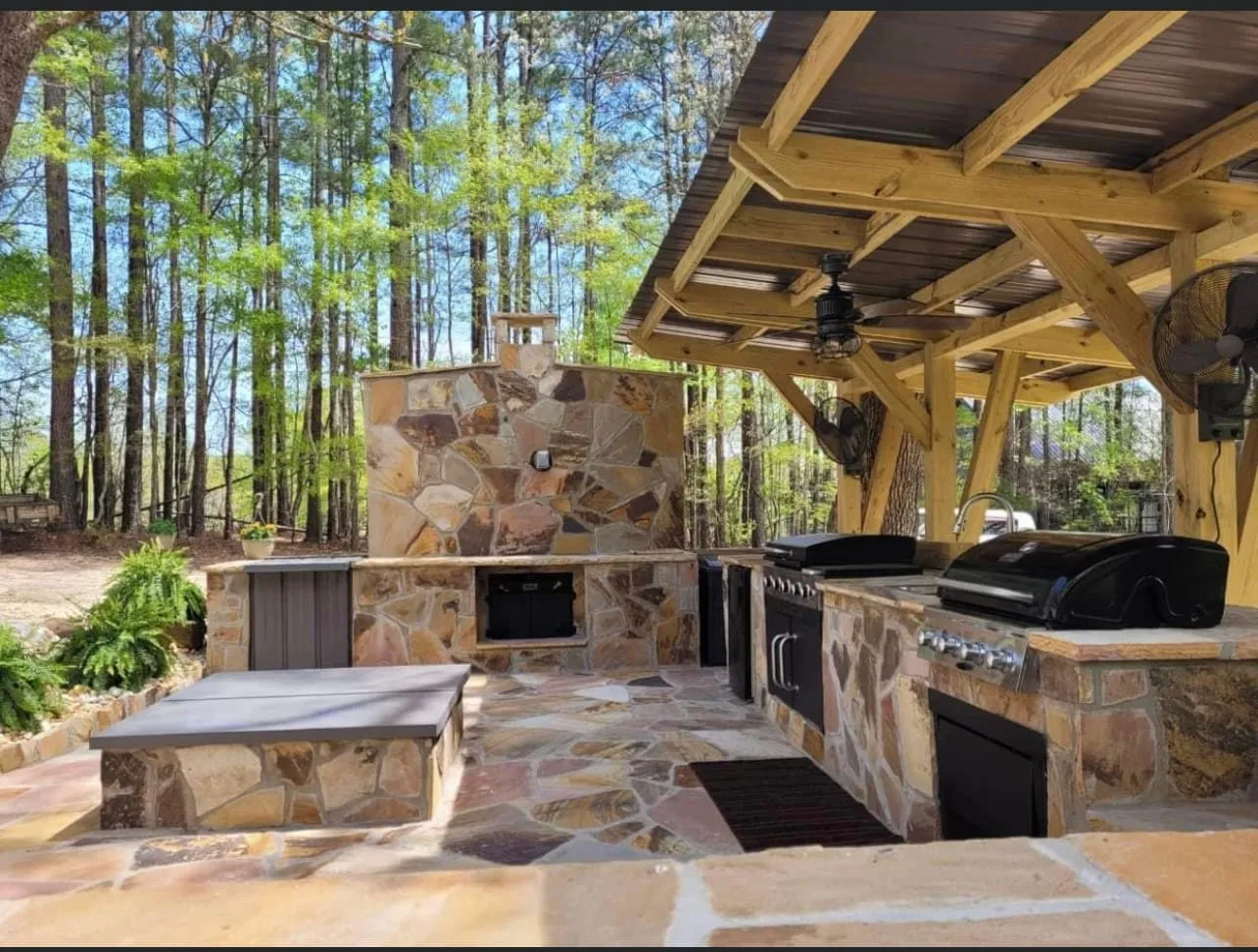
Plan the kitchen with the patio, not after. Gas, electric and water lines are much easier to run before the pavers go down. Our outdoor kitchens page covers what goes into one.
5. Raise it on a low or sloped lot
On a lot that slopes, or a low yard that holds water after storms, a raised patio with a block or stone edge can level the space and keep it dry. It’s built on retaining walls, with the inside filled and compacted in layers before the surface goes on.
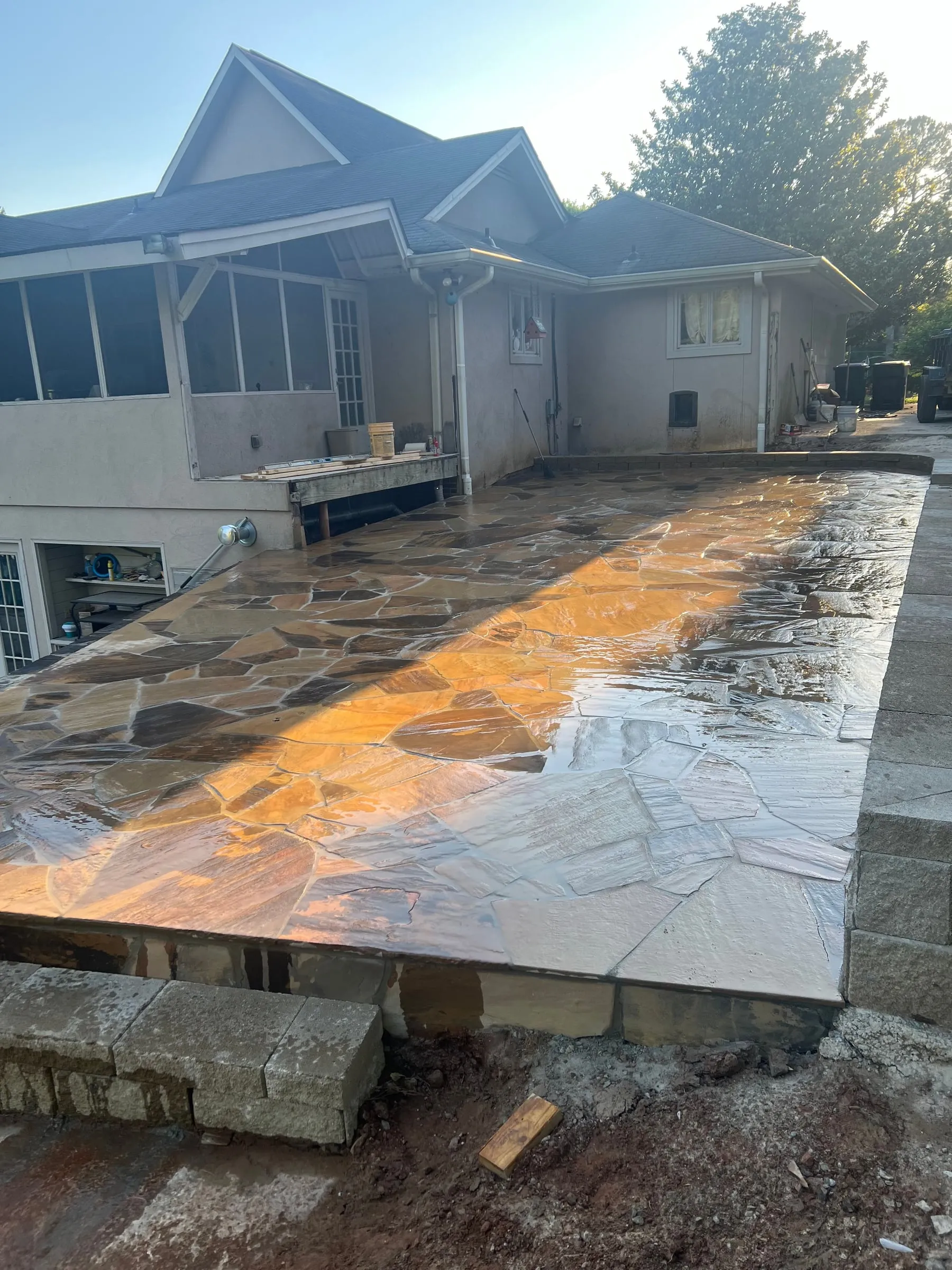
Raised patios are part patio, part wall, so the wall has to be built right: a solid footing, drainage stone behind it and a way for water to get out. See our retaining walls page.
6. Make room for shade
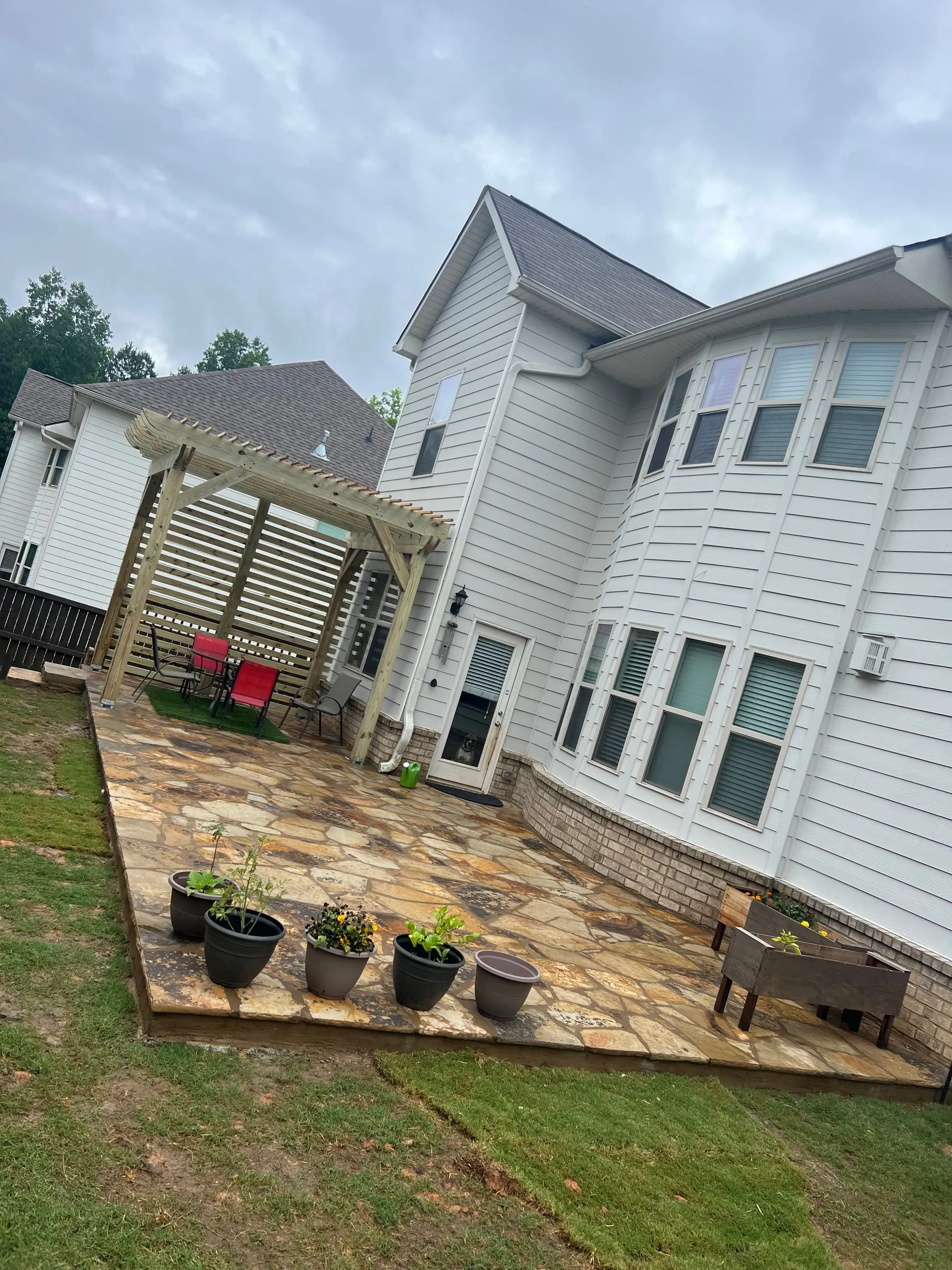
Full sun on a patio from noon to sunset is the number one reason Florida patios go unused in summer. Size the patio so it can take a pergola, a large umbrella or a shade sail, and place it where the house or trees block the late-afternoon sun.
7. Connect the yard
A patio works better when it connects to everything else: a walkway to the side gate, steps down to the lawn, a path to the pool or the dock. On waterfront lots, a patio facing the water is often the whole point of the yard.
Florida-friendly design tips
- Pick colors for heat. Lighter colors stay cooler and show less fading. Mid-tone blends hide pollen, leaves and dirt.
- Slope everything away from the house. Summer storms dump a lot of water at once. The patio should move it toward the lawn, not the door.
- Think about the screen enclosure. If the patio runs under a pool cage, leave room at the bottom rail so water can get out.
- Check with your HOA. Many Tampa Bay HOAs want to approve the paver color, pattern and layout before work starts.
- Build the base for Florida soil. Every idea above depends on a compacted base. See paver base and why pavers sink.
What a new patio costs
Cost depends on size, material and what has to come out first. A realistic starting point for a new patio with us is around $5,000. Per square foot, small patios cost more than large ones, because setup, equipment and edge work are spread over less area. Larger backyard patios typically run around $10,000, and projects that add a kitchen, fire feature or walls often land between $30,000 and $50,000. The Tampa paver cost guide has the details.
Start with how you’ll use it
Before choosing a pattern or color, decide what the patio is for: dinners for six, a fire pit with friends, a quiet spot for coffee, or a full outdoor kitchen. We’ll sketch the layout with you on the estimate visit, check where water goes when it rains, and match the material to the house. See more on our paver patios page, or browse our projects.
Frequently asked questions
What size should a paver patio be?
Size it around the furniture. As a rough rule, a table for six needs an area about 12 by 12 feet so chairs can pull out, and a seating group with a sofa and chairs needs about the same. Add space for a grill, a walkway through, and room to walk around a fire pit.
What paver color is best for the Florida sun?
Lighter colors stay cooler underfoot and show less fading. Mid-tone blends hide dirt, leaves and pollen better than solid light colors. Very dark pavers get hot in full sun, which matters most near a pool.
Do I need a permit for a paver patio?
A simple patio at ground level often doesn’t need a building permit, but patios with pergolas, roofs, outdoor kitchens, gas lines or electrical usually do. Your HOA may need to approve it too. See paver permits in Tampa Bay.
Can I add a fire pit or kitchen later?
Usually, yes, but it’s easier and often cheaper to plan for it now. Gas, electric and water lines are much simpler to run before the patio goes down than after.
Pavers or flagstone?
Pavers are uniform, cost less and suit both modern and traditional homes. Flagstone has an irregular, natural look and costs more. We bring samples of both to the estimate.