
Pavers over concrete: when it works and when to tear it out
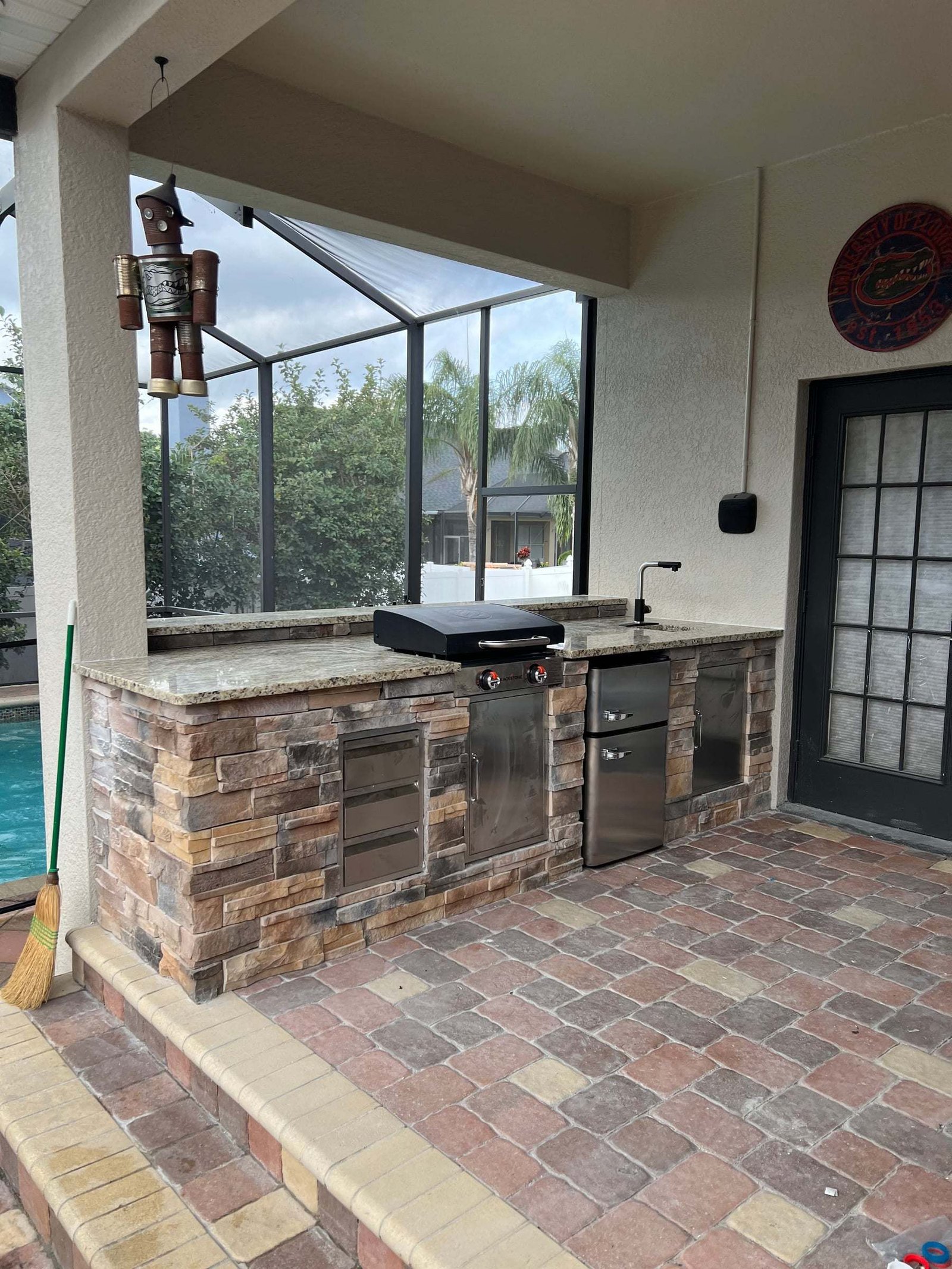
Yes, you can put pavers over concrete, and on a lot of Tampa Bay pool decks and patios it’s a good way to go. It works when the slab is sound, drains away from the house and pool, and there’s room for the extra height at doors, coping and drains. When the slab is cracked and moving, drains the wrong way or sits too high already, tearing it out and starting from a proper base is the better job.
We do both. Here is how we decide, and what to watch for if you’re comparing quotes.
How pavers go over concrete
There are two common ways to put pavers over an existing slab.
Bonded (mortar-set). Thin pavers or travertine are set in mortar or adhesive directly on the concrete. This adds the least height and is common on pool decks and lanais. The slab underneath has to be solid, because the pavers move with it.
Sand-set over the slab. Full-thickness pavers are laid on a thin bed of sand spread over the concrete, with an edge restraint around the outside. Holes are drilled through the slab at the low spots so water that gets into the sand can drain out. This adds more height, but the pavers can be lifted and reset later.
Either way, the existing slab becomes the base. That’s the whole idea: if the slab is a good base, you don’t need to dig it out and build a new one.
When pavers over concrete works
An overlay is a good option when:
- The slab is sound. No sections sinking, heaving or rocking. Old, stable hairline cracks are usually fine.
- It already drains. The surface slopes away from the house and pool, and water doesn’t sit in low spots after a storm.
- There’s room for the height. The new surface won’t block a sliding door, ride up over the pool coping, bury a deck drain or come too close to the bottom of the screen enclosure.
- The surface is clean and bondable. Paint or a peeling coating has to come off before anything is bonded to it.
When tearing out is better
Tear-out is the better call when:
- The slab is cracked and moving. If one side of a crack is higher than the other, the slab is still shifting, and pavers on top will crack or shift with it.
- It drains toward the house. Overlaying a slab that pitches the wrong way keeps the problem and adds height to it.
- Roots are lifting it. Tampa’s big oaks lift slabs from below. Covering the slab doesn’t stop the roots.
- There’s no room for height. Patio slabs that already sit right at the door threshold leave no space for an overlay.
- You want a new shape. If the deck or patio is getting bigger, smaller or a new outline, the new areas need a proper base anyway, and starting fresh can be simpler.
When we tear out, the old concrete is broken out and hauled away, and the area is rebuilt on a compacted base. Our guide to paver base and why pavers sink explains what goes into it.
Pool decks: coping, drains and the screen enclosure
Pool decks have the most to check before going over concrete.
- Coping. The new surface has to meet the pool coping cleanly. Sometimes the old coping stays and the deck is set to meet it; sometimes new coping goes on to match the new deck height.
- Deck drains. Existing drains have to be raised to the new surface, or water will pond around them.
- Screen enclosure. Many Florida pool cages sit on the edge of the deck slab. Tearing out a slab under a cage takes careful planning, which is one reason overlays are popular on caged pools. Leave room at the bottom rail so the new surface doesn’t block drainage.
- Pool safety. Whatever safety features the pool has, such as a fence, the screen enclosure or door alarms, have to keep working while the deck is being redone. If the work changes the barrier, check with your city or county building department.
Want travertine instead of pavers? It can go over concrete the same way. See travertine vs pavers for a pool deck for how the two compare.
Patios and lanai slabs
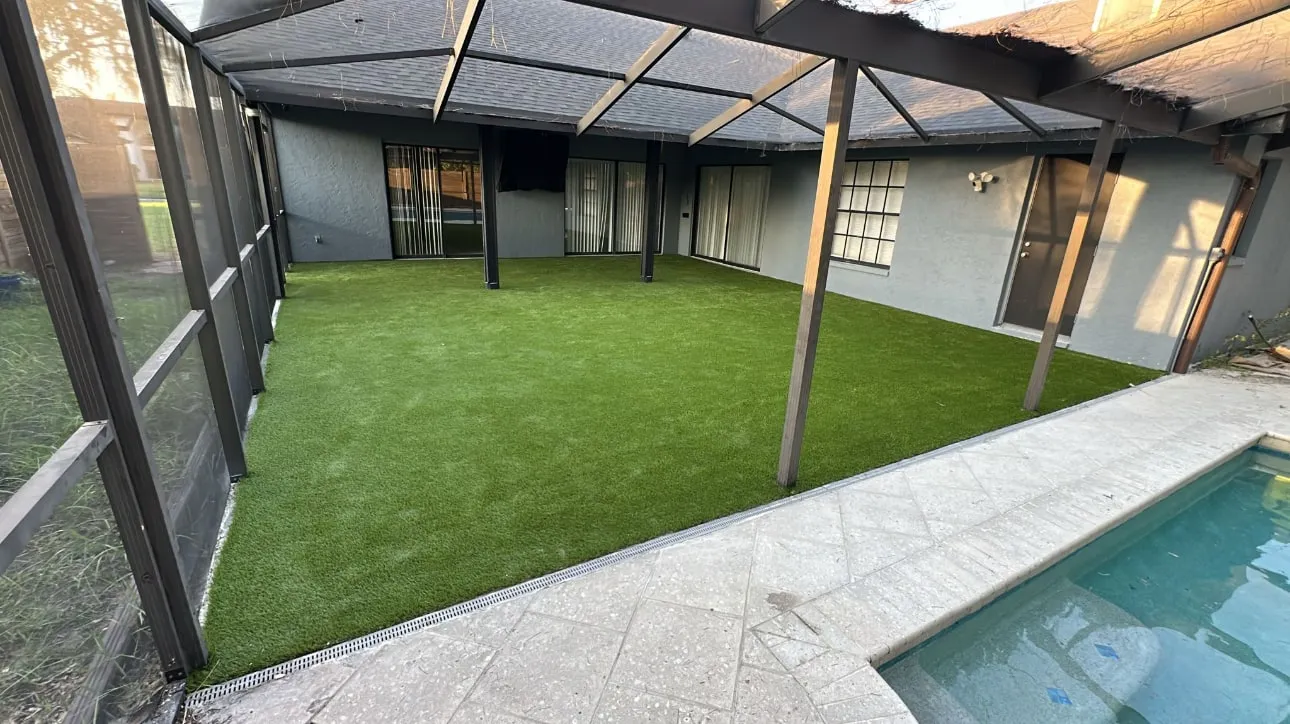
The most common patio version: a small concrete slab under the lanai roof that you want to make bigger. We can extend with pavers beyond the slab and, when it makes sense, cover the old slab so the whole patio matches.
The part past the slab gets a full dig-out and compacted base, and the covered part is set at the same height so there’s no lip where they meet. The door threshold is the thing to measure first. Many lanai slabs sit only a little below the sliding door, so the type of paver you choose depends on how much room you have.
Cost: overlay vs tear-out
Breaking out and hauling away old concrete is one of the biggest costs on a pool deck or patio job, so an overlay is usually somewhat cheaper. But it isn’t free: thin overlay pavers and setting materials cost money, and work around coping and drains doesn’t go away.
If both options are possible for your slab, ask for both prices. If tear-out is the only sound option, an overlay quote that skips it is a short-term saving.
A realistic starting point for a new pool deck or patio project with us is around $5,000, and larger areas cost less per square foot than small ones. The Tampa paver cost guide covers what drives the price.
What to ask before you go over concrete
- Is my slab sound enough to use as a base?
- How much height will the new surface add, and how does that work at each door, the coping and the drains?
- Bonded or sand-set, and why?
- What happens to the deck drains and the screen enclosure?
- What would tear-out cost instead?
We look at all of this on the estimate visit. If an overlay makes sense, we’ll say so; if your slab needs to come out, we’ll explain why. See our pool deck pavers and paver patios pages for what each job includes.
Frequently asked questions
Can you put pavers over a concrete pool deck?
Often, yes, if the deck is sound, slopes away from the pool and there’s room for the added height at the coping, doors and screen enclosure. If the slab is badly cracked, sinking or draining the wrong way, tearing it out is the better job.
How much height do pavers add over concrete?
It depends on the paver and the method. Thin overlay pavers or travertine with their setting bed usually add somewhere around an inch and a half to two and a half inches. Full-thickness pavers on a sand bed add more. We measure the doors, coping and drains on the estimate visit before recommending either way.
Will cracks in my concrete show through the pavers?
Cracks that are still moving can show through, especially when pavers are bonded straight to the slab. Old, stable hairline cracks usually aren’t a problem. Cracks with one side higher than the other mean the slab is moving, and that’s a sign to tear out.
Is putting pavers over concrete cheaper than tearing it out?
Usually somewhat, because breaking out and hauling away concrete is one of the biggest costs on a pool deck or patio job. But overlay pavers and setting materials can offset part of the savings, so get both prices if both are possible.
Can pavers go over a cool deck or painted coating?
A coating that is peeling or loose has to come off first, because pavers bonded to the deck are only as solid as what they’re stuck to. We check the coating and the slab under it on the estimate visit.