
Travertine vs pavers for a Florida pool deck
Travertine vs pavers is one of the first choices to make for a new Florida pool deck. In short: travertine stays cooler underfoot, grips well when wet and looks more upscale, but it costs more and needs a sealer made for stone. Concrete pavers cost less, come in far more colors and shapes, and are very tough, but dark colors get hot in the sun.
Both make a good pool deck when they’re built on a proper base and sloped away from the pool and the house. Here is how they compare on the things Tampa Bay pool owners ask about.
What each one is
Travertine is a natural stone, a type of limestone with small holes and pores in it. For pool decks it usually comes as tumbled pavers with soft, rounded edges and a textured surface, in ivory, cream, walnut and gray-silver tones. Matching coping pieces are available for the pool edge.
Concrete pavers are made in a factory from concrete poured into molds. They come in dozens of colors, blends, sizes and textures, including travertine-look and large-format slabs. Many lines also offer matching coping.
Travertine vs pavers at a glance
| Travertine | Concrete pavers | |
|---|---|---|
| Heat underfoot | Stays relatively cool; light, porous stone | Depends on color: light colors stay cooler, dark colors get hot |
| Grip when wet | Good when tumbled; slick if polished | Good; most have a textured surface |
| Look | Natural stone, every piece slightly different | Uniform; huge range of colors and patterns |
| Cost | Higher | Lower |
| Toughness | Softer stone; edges can chip | Very hard-wearing |
| Salt water | Needs a good sealer and rinsing | Also benefits from sealing and rinsing |
| Repairs | Replace single pieces; keep spares, since color varies by batch | Replace single pieces; colors easier to match |
| Sealing | Recommended, with a stone sealer | Optional |
Heat: which stays cooler?
Florida pool decks get full sun for hours, so heat matters more here than almost anywhere. Two things decide how hot a surface feels: its color and how much heat it holds.
Travertine is light-colored and porous, so it tends to stay cooler than concrete pavers of a similar color, which is a big reason it’s so common around Florida pools. A light-colored concrete paver closes much of that gap. A dark gray or charcoal paver in full afternoon sun is the one that sends people hopping to the water.
If you want pavers for the price but care about heat, pick a light color. If bare feet on the deck all summer is the priority, travertine is hard to beat.
Grip and safety when wet
Tumbled travertine and most concrete pavers have a textured surface that grips better than smooth or painted concrete. Two things make either one slicker:
- A polished or honed finish on the stone
- A glossy, film-forming sealer
For a pool deck, choose a tumbled or textured finish and a natural-finish sealer. Our paver sealer guide covers the difference between wet-look and natural sealers.
Salt water pools
Many Tampa Bay pools run on salt. Salt water splashes onto the deck, the water evaporates, and salt crystals are left in the pores of the surface. Over the years that can make porous stone and concrete flake at the surface, usually near the pool edge first.
To protect either material:
- Choose a dense, good-quality stone if you go with travertine. Grades vary, and cheap stone has more holes and softer spots.
- Seal it with a product made for salt pools, and keep it sealed.
- Rinse the deck with fresh water now and then, especially near the coping.
Cost
Travertine costs more than concrete pavers, both for the material and, often, for the labor, because natural stone varies in thickness and needs more care to set and cut. How much more depends on the grade, the size of the pieces and the shape of your deck.
What moves a pool deck price most is the same either way: the size of the deck, whether an old concrete deck has to be broken out and hauled away, and the work around coping and drains. A realistic starting point for a new deck project with us is around $5,000, and larger decks cost less per square foot than small ones. The Tampa paver cost guide has more on what drives the number.
Upkeep
Travertine: seal it with a stone sealer and reseal every few years. Unfilled travertine can collect dirt in its holes, which some owners like as part of the look. Keep a few spare pieces from the original job, since color varies from batch to batch.
Concrete pavers: sealing is optional. Keep the joint sand topped up, and rinse or wash off stains. Damaged pavers can be lifted and replaced.
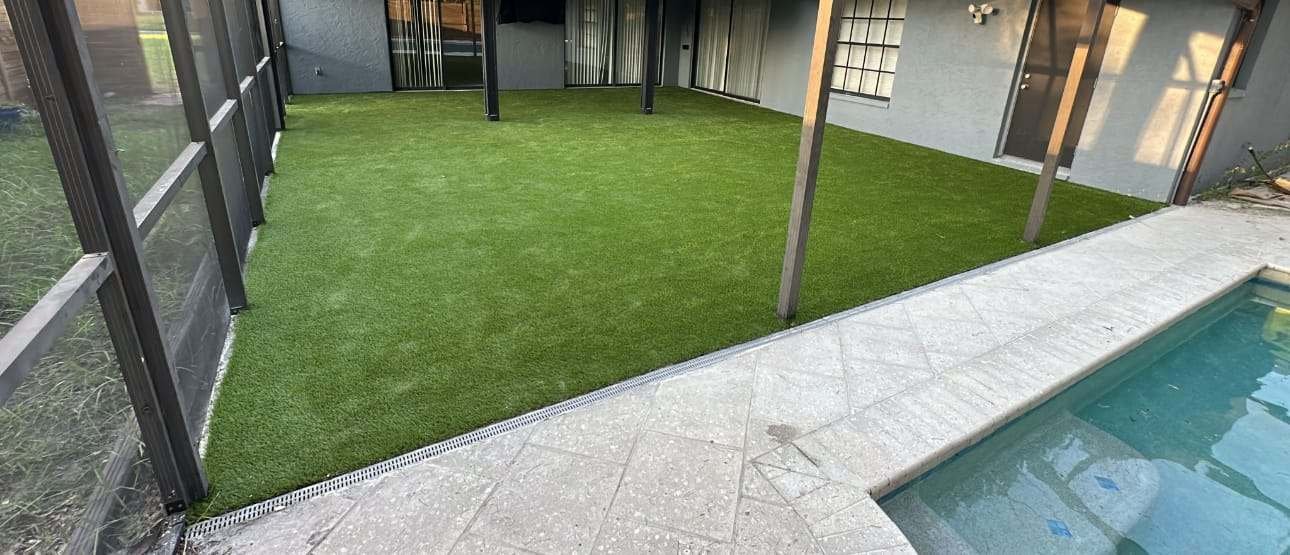
Both need the same thing underneath: a compacted base and good slope. Water that sits on a deck, or runs toward the house, causes more trouble than the choice of material. On the job in the photo at the top, a slot drain runs between the deck and the turf to catch water before it reaches the house.
Other options: flagstone and travertine-look pavers
Flagstone gives a natural, irregular look and pairs well with fire pits and planted edges. Like travertine, it costs more than concrete pavers.
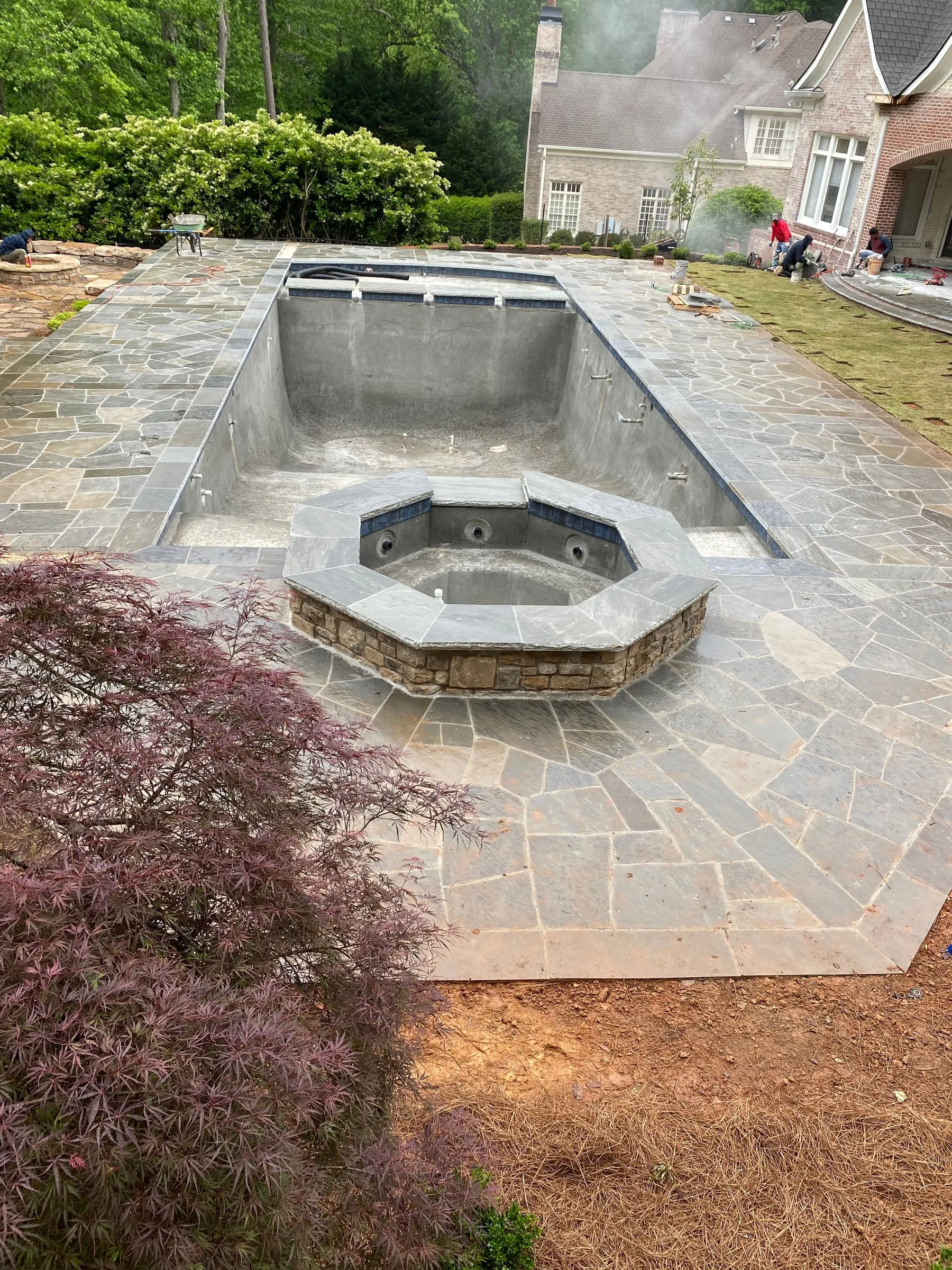
Travertine-look concrete pavers copy the color and texture of stone at a paver price. They’re a good middle ground if you like the travertine look but want the toughness and color consistency of pavers.
How to choose
- Choose travertine if you want the coolest feel underfoot, a natural stone look, and you’re comfortable with the higher price and resealing.
- Choose concrete pavers if budget, color choice or toughness matters more, or you want a pattern or a driveway that matches. Pick a light color for heat.
- Look at samples by the pool. Stone and paver colors look different in Florida sun than in a showroom. We bring samples to the estimate so you can see them on your own deck.
If you’re replacing an old concrete deck, you may be able to go over it instead of tearing it out. See pavers over concrete for when that works. Or see our pool deck pavers page for what a new pool deck with us includes.
Frequently asked questions
Is travertine good for a pool deck in Florida?
Yes. It’s one of the most popular pool deck materials in Florida because it stays relatively cool, has a textured surface that grips when wet, and looks upscale. Pick a good grade, have it installed on a solid base, and seal it with a product made for stone.
Is travertine cooler than pavers?
Usually, yes, compared with concrete pavers of a similar or darker color. Light, porous stone holds less heat. A light-colored concrete paver closes much of the gap, while a dark paver in full sun gets hot.
Is travertine slippery when wet?
Tumbled travertine has a textured surface that grips well wet. Polished stone, or a glossy film sealer, is slicker. Around a pool, choose a tumbled or textured finish and a natural-finish sealer.
Does salt water damage travertine?
It can, over time. Salt water dries in the stone’s pores and the salt crystals can make the surface flake. A dense, good-quality stone, a sealer made for salt pools and a regular fresh-water rinse all help. Concrete pavers are not immune either.
Which costs more, travertine or pavers?
Travertine. How much more depends on the grade, size and finish of the stone and the shape of the deck. The Tampa paver cost guide covers what drives pool deck prices.
Can travertine go over my existing concrete pool deck?
Often, if the slab is sound and there’s room for the added height at the coping and doors. See pavers over concrete for when it works and when tearing out is better.