
Best paver sealer for Florida: wet look or natural?
There is no single best paver sealer for every Florida home. The best one for your pavers is breathable, stands up to strong sun, is made for your surface (concrete pavers, travertine or natural stone), and gives the finish you like: a glossy wet look or a natural, matte look. Just as important is timing. Sealing new pavers too early causes more problems than the wrong brand.
We’re installers first, and we can seal a new install once it’s ready. Here is how we think about it.
Should you seal your pavers at all?
Pavers don’t need sealer to last. A paver driveway or patio built on a good base will hold up for years unsealed. Sealing is about looks and upkeep.
Reasons to seal:
- Deeper, richer color, or a glossy wet look
- Stains (grease, food, leaf tannins, pool chemicals) wipe off more easily
- A joint-stabilizing sealer helps hold joint sand in place during Florida downpours
- Less mold and algae taking hold in shady, damp spots
Reasons not to bother (or to wait):
- You like the natural, unsealed color
- A film sealer needs recoating every few years, and that’s an ongoing cost
- A glossy film can be slicker when wet, which matters around pools
- Sealing too early, or over moisture, can trap a white haze or turn cloudy
So the honest answer to “should I seal my pavers” is: often yes for driveways and pool decks where stains and joint sand matter, often optional for a patio you like the look of already.
Wet look vs natural finish
This is the first choice to make, because it decides which kind of sealer you need.
| Wet look | Natural look | |
|---|---|---|
| What it looks like | Darker, richer color with a gloss, like the pavers just got rained on | Close to the unsealed color, little or no shine |
| Typical sealer | Film-forming acrylic (often solvent-based) | Water-based acrylic, or a penetrating sealer |
| Grip when wet | Can be slicker, unless a non-slip additive is used | Usually closer to unsealed pavers |
| Recoat | More often in full sun; the gloss fades first | Often lasts longer, and fades less visibly |
| Good for | Driveways, front entries, patios where color is the point | Pool decks, travertine, anyone who wants a low-key finish |
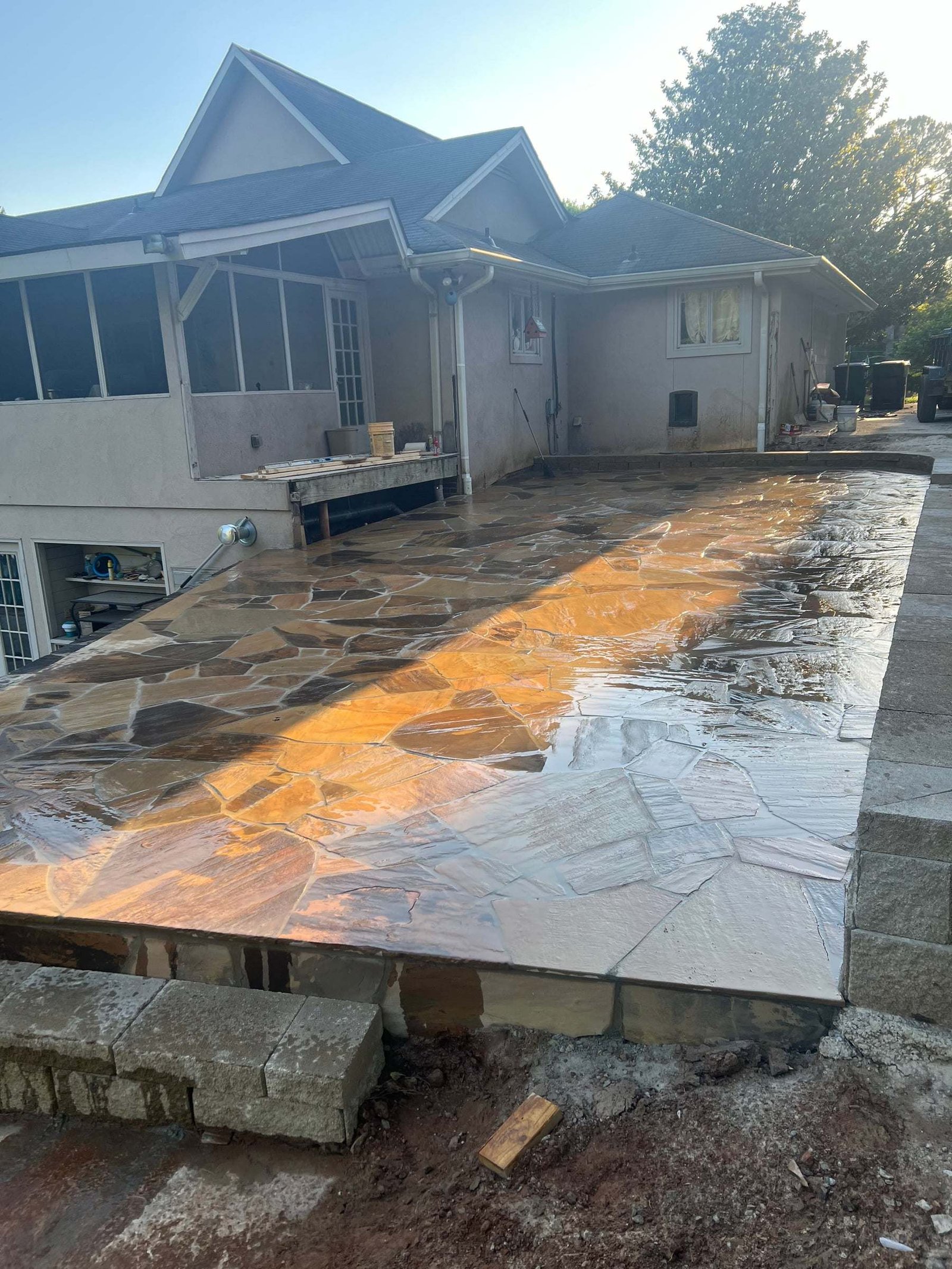
The photo at the top of this page is one of our flagstone patios after sealing. You can see how the wet-look finish darkens the stone and brings out the color.
The main types of paver sealer
- Film-forming acrylic. The most common paver sealer. It sits on the surface and gives the color boost. Solvent-based versions usually give the deepest wet look; water-based versions are lower odor and tend to give a more natural finish.
- Polyurethane. A harder, more chemical-resistant film. Tougher on high-traffic driveways, but it costs more and can be harder to strip later.
- Penetrating sealers (silane or siloxane). They soak in and repel water without leaving a film. No shine and little color change, which makes them a common pick for travertine and natural stone around pools.
- Joint-stabilizing sealers. Many acrylics are made to soak into the joints and bind the top of the sand. Useful in Florida, where storms wash loose joint sand out.
Whatever the type, use a sealer made for your surface. Travertine and natural stone need a product made for stone, not a concrete paver sealer.
What Florida does to sealer
Sun. Strong UV breaks film sealers down. The gloss fades first, usually on the sunniest side of the driveway or pool deck. That’s why reseal intervals here are shorter than the label might suggest.
Rain and humidity. Pavers have to be dry before sealing, and the sealer needs a dry window afterward to cure. In summer, with afternoon storms most days, that means sealing in the morning on a dry stretch. Moisture trapped under a film sealer can turn it cloudy or white.
Salt pools. Salt water splashes onto the deck, dries and leaves salt in the pores of the stone or paver. Over time that can make the surface flake. A sealer made for salt pools, plus a regular rinse with fresh water, helps. Our travertine vs pavers guide covers salt pools in more detail.
Shade and mold. Damp, shaded spots under oaks or along the north side of the house grow mold and algae. Sealer slows it down but won’t stop it if the area stays wet.
When to seal new pavers
This is where most sealing problems start. New concrete pavers can push out a white haze, called efflorescence, in the first weeks or months. If you seal over it, you can lock it in under the film.
For a new install, the usual order is:
- Let the pavers settle in. Wait for any efflorescence to work its way out. How long depends on the pavers and the weather, so follow the paver maker’s guidance.
- Make sure the joints are fully cured. Polymeric sand has to harden completely before sealer goes on.
- Clean the surface. Any dirt, haze or stains left on the pavers get sealed in.
- Seal on a dry day, with the pavers dry and no rain expected while it cures.
On our installs, we’ll tell you when your pavers are ready and whether sealing makes sense for them.
How often to reseal pavers in Florida
As a rough guide:
- Film-forming sealers in full sun: about every two to three years
- Penetrating sealers: often longer between coats
- Pool decks and shaded, damp areas: check more often
The sign it’s time: water stops beading on the surface, or the color has faded back toward unsealed. Reseal before the old coat has completely worn off, and clean the pavers well first.
Sealing won’t fix a bad base
Sealer is a finish, not a repair. If pavers are sinking, rocking or holding puddles, the problem is underneath, and sealer will only make the dips shinier. Our guide to paver base and why pavers sink explains what to look for.
If your old patio or driveway is past saving, a new install built on a proper base, and sealed once it’s ready, is often the better investment. We also offer paver sealing, but most of our work is new paver patios, driveways and pool decks.
Frequently asked questions
Should I seal my pavers?
You don’t have to. Pavers hold up fine unsealed. Sealing is worth it if you want deeper color or a wet look, if the area gets food, grease or leaf stains, or if you want help keeping joint sand in place. We’ll tell you honestly whether your project needs it.
How long after installation should new pavers be sealed?
Not right away. New concrete pavers can push out a white haze (efflorescence) in the first weeks or months, and sealing over it can trap it. Wait until the haze has worked out and the joint sand has fully cured, and follow the paver maker’s guidance. We’ll tell you when your new install is ready.
How often should pavers be sealed in Florida?
As a rough guide, film-forming sealers in full Florida sun usually need a fresh coat every two to three years. Penetrating sealers often last longer. Shade, pool splash and heavy traffic all shorten that.
Will sealer make my pool deck slippery?
A glossy film can be slicker when wet. Around pools, a natural-finish sealer or one with a non-slip additive is the safer choice. On our pool decks, if you seal, we use a sealer suited to pool decks.
Does sealer stop weeds and ants?
It helps. A joint-stabilizing sealer binds the top of the joint sand, so it washes out less and is harder for seeds and ants to get into. It isn’t a cure-all: the joints still need to be filled properly in the first place. See our guide to polymeric sand in Florida.