
Pavers vs concrete driveway in Florida
Pavers vs concrete is the main choice when a Florida driveway needs replacing. Concrete costs less up front. Pavers cost more, but they don’t crack across like a slab, they can be lifted and reset when the ground moves, and repairs don’t show. On Tampa Bay’s sandy soil, with big oak roots and summer storms, pavers usually come out ahead over the long run.
Here’s how the two compare, and how to decide which is right for your driveway.
Pavers vs concrete at a glance
| Concrete driveway | Paver driveway | |
|---|---|---|
| Upfront cost | Lower | Higher |
| Cracking | Most slabs crack somewhere over time | Joints flex; the surface doesn’t crack across |
| Repairs | Patches usually show | Lift, fix the base, relay the same pavers |
| Roots | Slab lifts and cracks | Pavers can be lifted, roots dealt with, pavers reset |
| Look | Plain gray, or stamped or stained for more cost | Many colors, shapes, patterns and borders |
| Upkeep | Pressure wash; fill cracks | Pressure wash; top up joint sand; optional sealing |
| Ready to drive on | Days to a week or more, while concrete cures | Once joints are filled and the sand has cured |
Upfront cost
Concrete is cheaper to install. As a rough guide in the Tampa Bay market right now, a plain concrete driveway often runs somewhere around $8 to $14 per square foot installed, and a paver driveway more like $15 to $25 or more. Tear-out of the old driveway, the paver you choose, the pattern and borders all move those numbers. Smaller driveways cost more per square foot than larger ones, because setup and equipment are spread over less area.
For our own jobs, most paver driveways run about $9,000 to $15,000, with the higher end usually including tearing out and hauling off an old concrete driveway. These are typical ranges, not quotes. The Tampa paver cost guide covers what drives the price.
Why concrete driveways crack in Florida
Concrete is strong but rigid. When the ground under it moves, it cracks. In Tampa Bay, the ground moves for a few reasons:
- Sandy soil. Sand settles and washes out, especially at the edges where storm water runs off.
- Tree roots. Older neighborhoods like South Tampa and Carrollwood have mature oaks, and their roots lift and break slabs.
- Heavy rain. Summer storms and tropical systems saturate the ground, and water that gets under a slab carries sand away.
- Heat. Concrete expands and contracts with temperature. Control joints are cut to decide where it cracks, but cracks often show up elsewhere too.
Once a slab cracks, the fix is a patch that rarely matches, or replacing whole sections.
Why pavers handle it better
A paver driveway is thousands of small units sitting on a compacted base, locked together by joint sand and an edge restraint. When the ground moves a little, the joints flex instead of the surface cracking.
When something does go wrong, such as a root pushing up one corner or a plumber needing to dig under the driveway, the pavers in that area are lifted, the problem is fixed, the base is recompacted and the same pavers go back down. Done well, you can’t tell.
That only works with a good base. A paver driveway on a thin or poorly compacted base will rut and sink where you park. Our guide to paver base and why pavers sink explains what a driveway base should look like.
How long each one lasts
A well-built concrete driveway can last for decades, but in Florida most will crack somewhere along the way. How long it stays looking good depends on the soil, the roots nearby and how well it was built.
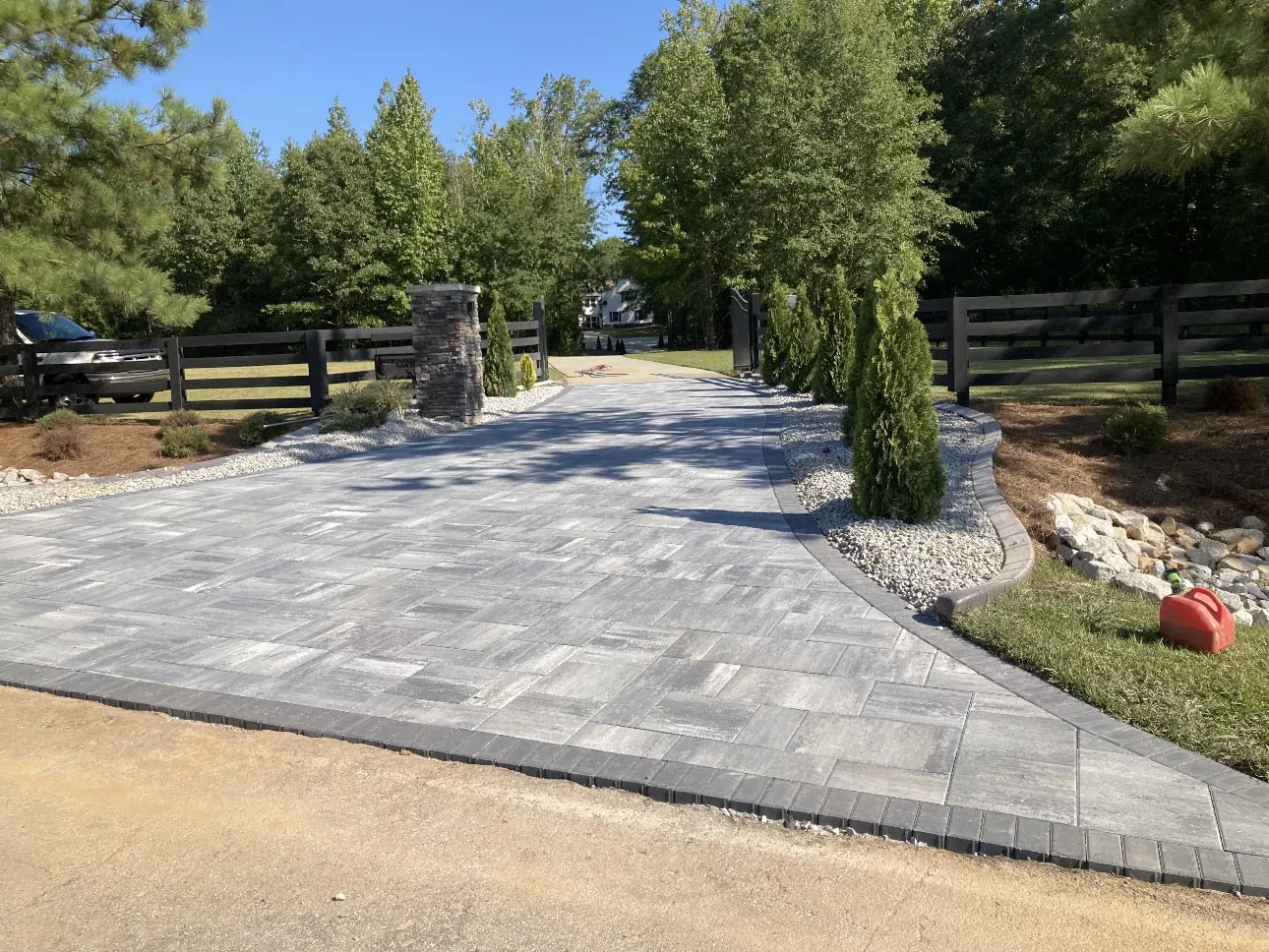
A paver driveway built on a deep, compacted base also lasts for decades. Concrete pavers are dense and made to carry cars, and individual pavers rarely wear out. The difference is what happens when something goes wrong: a paver driveway can be repaired in sections without a visible patch, so it can keep looking good much longer.
Heat, stains and upkeep
Heat. Both get hot in the Florida sun. Lighter colors stay cooler for either one.
Stains. Oil drips and rust stains from well-water sprinklers mark both. On concrete, a bad stain is there for good unless you resurface. On pavers, a badly stained paver can be swapped. A sealer makes stains easier to clean off; see our paver sealer guide.
Upkeep. Concrete needs washing and crack filling. Pavers need washing, a top-up of joint sand now and then, and optional sealing.
Curb appeal and HOAs
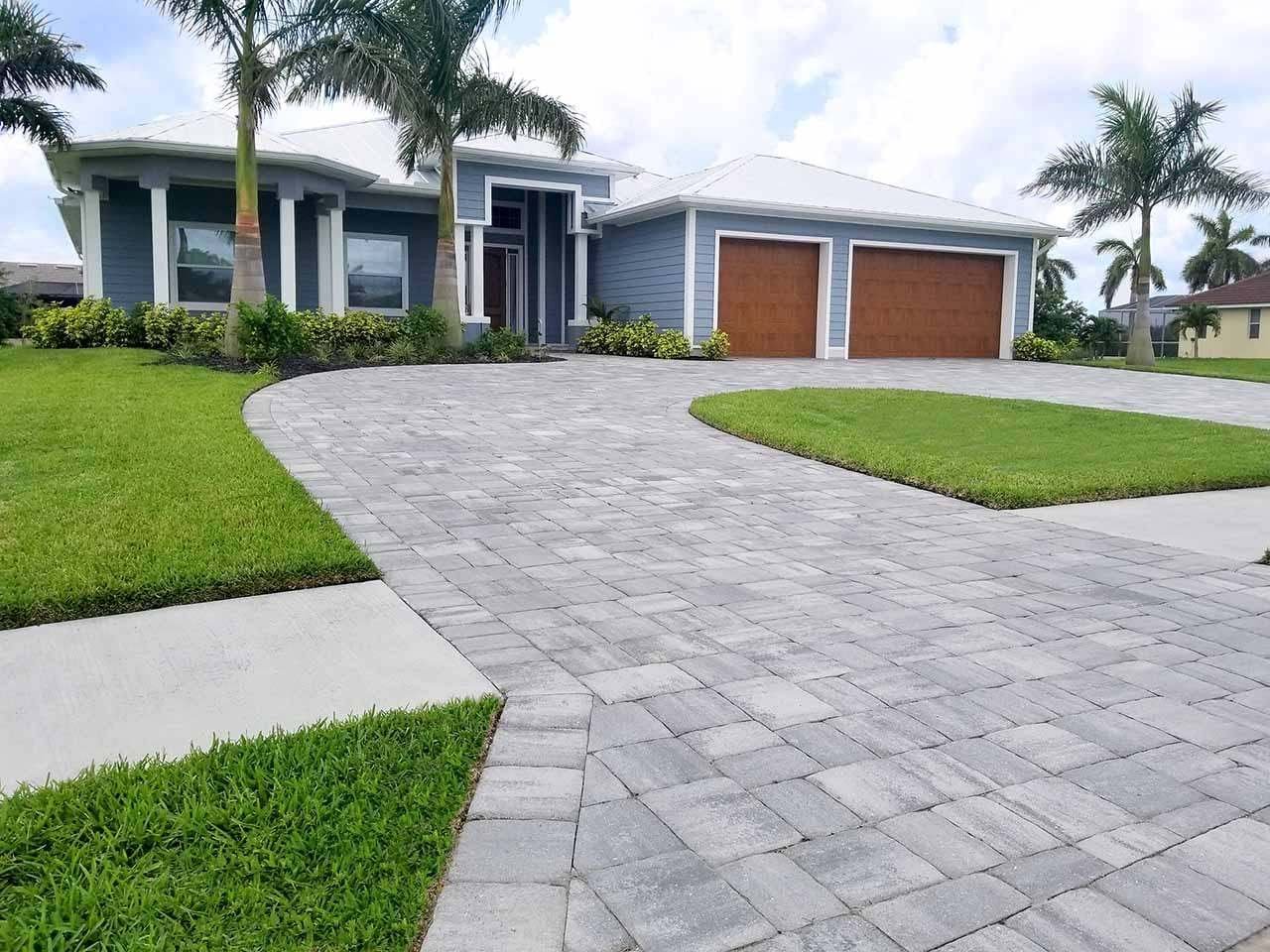
Pavers give you far more choice: colors, blends, sizes, herringbone or basketweave patterns, borders, and curved edges like the driveway in the photo at the top of this page. Concrete can be stamped or stained for more character, at a higher cost, but it’s still one slab that can crack.
Many Tampa Bay HOAs want to approve driveway colors and patterns before work starts, so check your HOA’s rules early. The part of the driveway that meets the street, called the apron, often needs a permit too. Our guide to paver permits in Tampa Bay covers who to ask.
Which one should you choose?
Concrete makes sense if:
- The lowest upfront price matters most
- You’re planning to sell soon and the buyer won’t care
- There are no big trees near the driveway
Pavers make sense if:
- You’re staying in the home for years
- Your current slab has already cracked from roots or settling
- You want a driveway that matches a paver walkway, entry or pool deck
- You want repairs that don’t show
What a paver driveway job with us includes
When we replace a concrete driveway with pavers, the job includes removing and hauling off the old concrete, excavation and grading so water runs to the street and not the garage, a deeper base than a patio gets, compacted in layers, the pavers in your pattern with clean transitions at the street and the garage, an edge restraint and polymeric sand joints. Sealing is optional.
See our paver driveways page for more, or ask for a free estimate and we’ll measure, look at the trees and drainage, and give you a written price.
Frequently asked questions
Is a paver driveway worth it in Florida?
For most homeowners who plan to stay a while, yes. It costs more up front, but it doesn’t crack across like a slab, repairs don’t show, and it handles Florida’s shifting sandy soil and tree roots better. If the lowest upfront price is all that matters, plain concrete wins.
How long does a paver driveway last?
Decades, when it’s built on a deep, compacted base. The pavers themselves rarely wear out. What usually ends a driveway’s life is the base settling or roots lifting it, and with pavers, those spots can be lifted, fixed and relaid.
Can you put pavers over my existing concrete driveway?
It’s possible in some cases, but most driveway jobs are tear-outs. Cracked slabs keep moving under car weight, and the added height causes problems at the garage and the street. On our driveway jobs, removing and hauling off the old concrete is part of the job.
How soon can I drive on a new paver driveway?
Pavers can carry traffic once the joints are filled and the surface is compacted, though the polymeric sand needs time to cure first. We’ll tell you exactly when it’s ready before we leave.
Do I need a permit or HOA approval for a paver driveway?
Often for the part that meets the street, and many HOAs want to approve colors and patterns first. See paver permits in Tampa Bay for who to ask.